"Neuroschool"
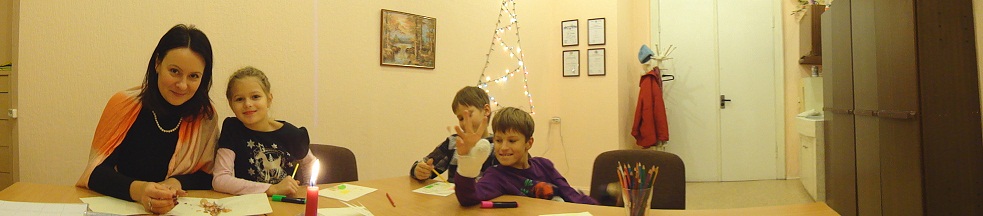
Neuroschool
Develop your child’s abilities!
It's preferable to do child’s education and training according to specifics of each person’s individual brain development.
Development – complex multi-edged process, which includes continuou brain functional system changes according to age. This development happens irregularly because of different brain functional system importance in various functional development stages. Nowadays negative factors of environment conditions and education imperfection rapidly increase brain functional system maturation irregularity.
Successful training allows obtaining complicated behavior skills in various situations and opens possibilities of creativity and predictability.
Lessons works as behavior stimulation theme that allows quick adaptation to variable environment conditions, new claims, correlations and communication, and promotes development of creative skills and thinking.
Children who are chosen for trainings in school have ADHD and immature frontal lobe , which are bound to emotional sphere, cerebellum area, extrapyramidal system and decision making accordingly to realization of programmed activity. Immature frontal lobe destroys training and education mechanisms, delays attention concentration on investigational object, these effects can disturb and delay psychological progression. There are different training programs for each age group, which are based on complex testing results: brain neurophysiological and cognitive specifics, analysis of information processed in brain based on research of perception, processing, maintenance and reproduction.
With each group of 3-5 people works team of experts :
1. Psychologists (pre-school, school, clinical) – train attention steadiness, memory, insistence, work ability, removes tension, evaluates why there is problems with adaptation for school. Concludes how child perceives and evaluates in general. Considering each child’s individual specifics, they train nervous process speed characteristics, to develop thinking processes and learn how to move from easy to hard tasks.
2. Rehabilitologist (doctors and physiotherapists) – teach children how to sense their body, how to be aware of emotions suitable for different kinds of situations. They define which child’s analyzer system is not developed, give advice to parents, so they could work with child at home. Works on improvement of analyzer system functioning, correlation between systems and improvement of peripheral. Rehabilitologist concludes the leading hemisphere, performs left and right hemisphere address trainings and develops between hemisphere correlations.
3. In two breaks, 15 minutes each, psychologists train all communication abilities – how to act right in different situations.
4. TIPS (theory of inventive problem solving) experts helps developing logical abilities – learn how to think few steps ahead, develop self-confidence, helps realize that child can achieve fortune. Children learn rules, which need to be considered to achieve the required goal. Parallel creative abilities are developed.
All experts carry out individual approach to every child , which is based on his neurophysiological and psychological specialties. To formalize the individual parent recommendations child behavior evaluation system is created.
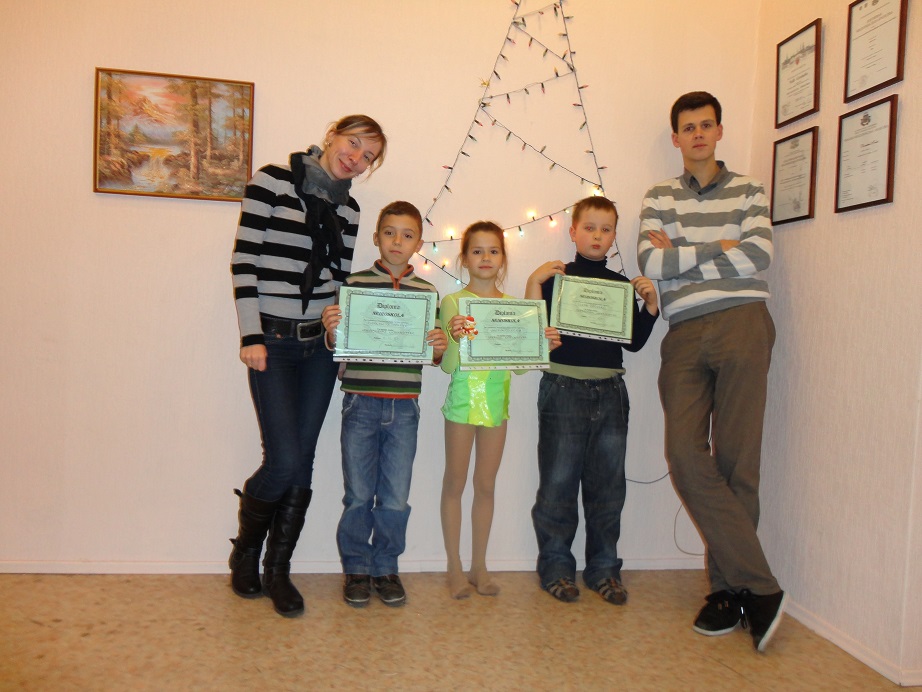
First winners
|
Preparation for lessons, mind “warm-up” |
Senso-motoric speed indicator training. Development of proprioceptive senses. |
|
Controlled attention training. Development of movement coordination. |
Logical ability training. |
|
Leisure time. Breathing exercises. |
Attention, reaction and movement coordination training. |
|
“ Live letters”-reaction plasticity rising. |
“ Live letters”-work with body. |
|
TIPS theory of inventive problem solving. |
„ Live sculptor”- freedom of body through movement. |
|
Winner of the competition by drawing detail magnificence. |
Last lesson, don’t want to say goodbye! |
|
Lesson before holiday – winner triumph. |
Awarding on the end of course. |
|
Sensomotoric repertory extension. Fast brain reaction in definite situations. |
Rigid body habit and tension overcoming. |
|
Creative imagination and creativity development. |
Creative potential expression freedom. |


