Neurophysiological and psychophisiological assessment of brain functioning
Clinical and quantitative analysis of brain electric activity by electroencephalogram – “Neurometrics”
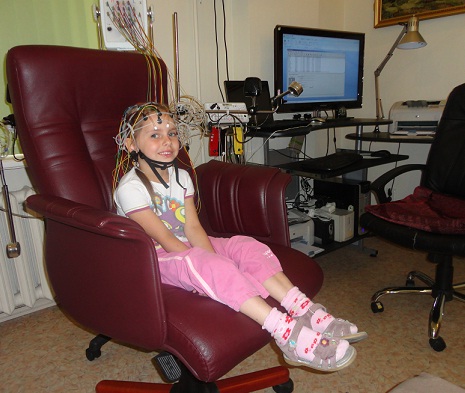
Registration of brain electric activity of 6 years old child in rest
Quantitative evaluation of brain electric activity was researched in biggest Russian scientific centers from the beginning of the 1960’s. For example academics M. N. Livanov (Institute of Higher Nervous Activity and Neurophysiology of the Academy of Sciences, Moscow), D. A. Farber (Institute of Age Physiology, Moscow), N. P. Behtereva (Institute for Experimental Medicine, St. Petersburg), P. K. Anohina and I. M. Sechenova (Institute of Normal Physiology, Moscow) in their laboratories. Quantitative EEG method for psychological disorder, including children with attention deficit disorder, diagnostics were suggested by scientist R. John from New York. He named this direction – neurometrics . This method is used in USA, Russia, Finland and other countries. What is the difference between clinical EEG and quantitative EEG? Clinical EEG is directed to epileptic and paroxysmal activity visual pattern searching . Only few last years quantitative EEG is used in clinical practice. Quantitative EEG method includes EEG different kinds of analysis: spectral, coherent and phase. Sources of EEG normal and pathological activity generation are determined. In addition to that obtained quantitative data is obligatory compared to normative age data base . Pr. J. D. Kropotov in his monograph (year 2005) defined questions on which quantitative EEG gives answers:
- Is there a physiological reason for patients complains, is there statistically based divergence in individual EEG comparing it to certain age biological standards?
- How these deviations appears, how they can be interpreted from the physiological point of view?
- How these deviations can be fixed with pharmacological medication of neurotherapy?
- How the quality and objective effectiveness of chosen medication or neurotherapy can be defined?
Quantitative analysis of brain bioelectric activity was just a first step of research. The next qualitatively deeper phase is analysis of EEG quantitative deviation . This method is based on up to date, fundamental scientific achievements in experimental psychoneurophysiology, biology and medicine. To gather information about brain functional state and define problematic areas, is needed knowledge about cortex and under cortex structure functionality, rhythm and brain area functional meaning, their correlation and specifics of brain area near cortex maturation in ontogenesis, etc. Combination of these two phases gives deeper scientific EEG analysis – neurometrics , which is recommended as very sensitive method for hidden brain dysfunction discovery, in cases when standard methods are uninformative. This circumstance is a cause for this research usage in world’s biggest scientific laboratories . What neurometrics give to each particular child? The reasons of deviation in his behavior and school grades are discovered, it can be caused by thinking process speed reduction, or functional state reduction of cortex in area of forehead and occiput, increased irritability of separate cortex areas, lack of bands in every hemisphere and between both hemispheres, slowed maturation of electrical activity in different cortex areas, etc. Understanding the physiological reasons of brain electrical activity deviation allows suggesting individual psychological – pedagogical or medical correction scheme . Neurophysiological research method is performed in waking state, from age of 2 years, this method can be used over and over again, because it doesn’t harm body.
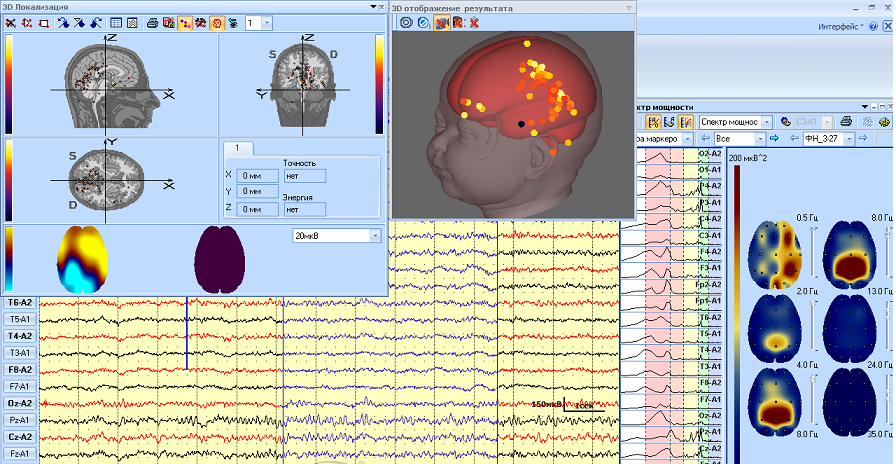
Diagnostics of brain electrical activity sources and partial statistic processing
Parallel valuation of functional state of brain bioelectrical activity and psychophysiological status valuation by the senso-motoric reaction indicators with device – “Psychophysiologist” allows making psychophysiological examination for dynamic control of central nervous system and brain functional state, and as well for rehabilitation and recreation process control and illness prophylaxis.
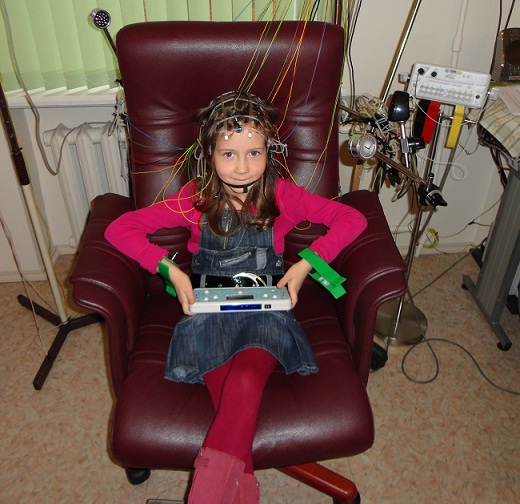
Physiological testing with neurophysiological control
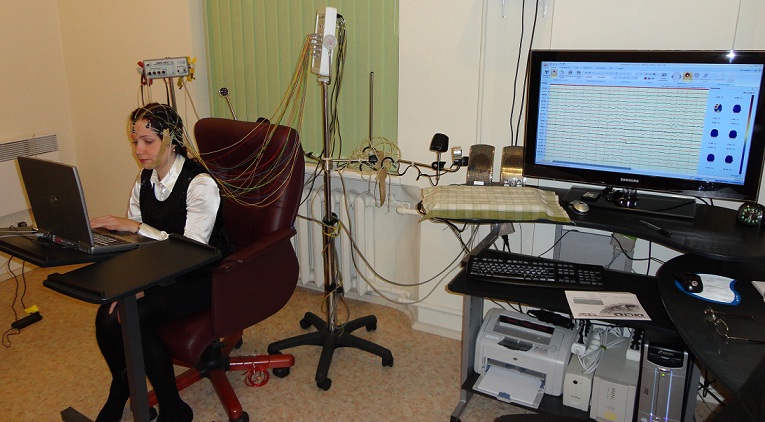
Registration of brain electrical activity at the moment of orientation in closed labyrinths
Testing of brain cognitive function in closed increasing complexity labyrinths.
Testing performs as a computer game: child’s orientation in different complexity closed labyrinths. It's known that searching activity is natural indicator of brain’s analytic activity and it's functional status.
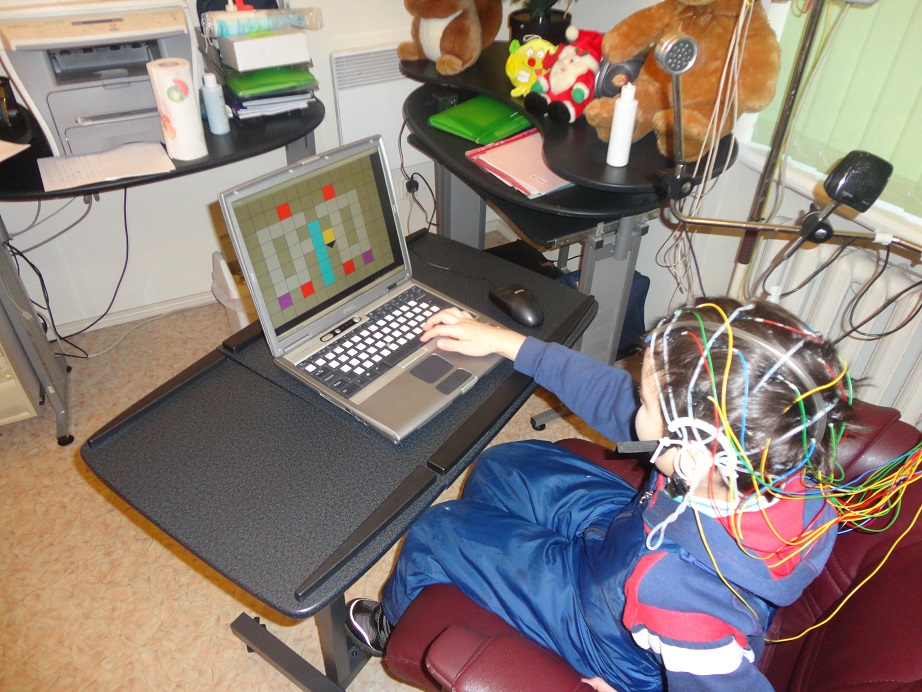
Examination of “Labyrinth” plan
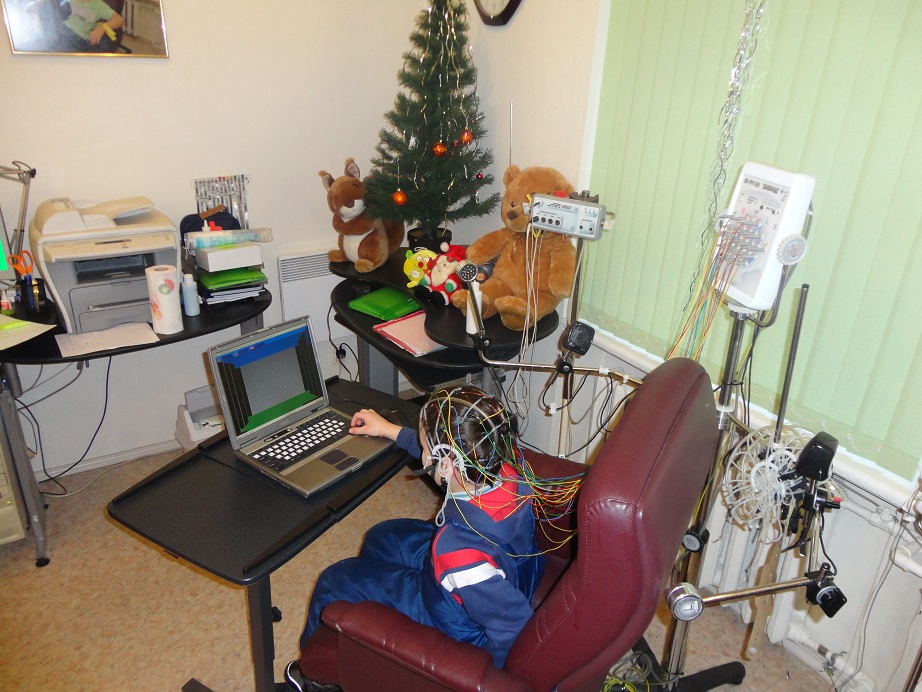
Gift searching in first “Labyrinth”
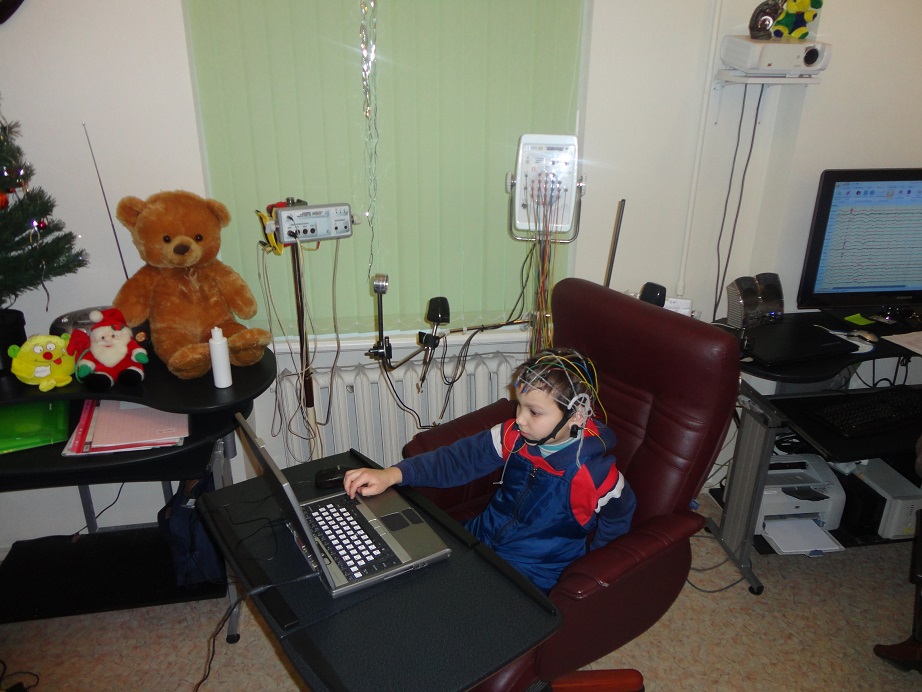
Realization of “Labyrinth” with increasing complexity